Sun-bleached cliffs, impossibly blue water, ancient villages — and barely a tourist in sight. Welcome to Europe’s best-kept coastal secret.
There’s a particular kind of magic that happens when you arrive somewhere the crowds haven’t quite found yet. The Albanian Riviera is one of those places — a 150-kilometre stretch of Ionian coastline that has been quietly dazzling travellers in the know while the rest of Europe looks the other way. Think rugged limestone mountains tumbling straight into turquoise water, olive groves scenting the air, and fishing villages where the pace of life still revolves around a long lunch and a cold glass of raki.
I’ll be honest: I was intimidated before I went. Albania still carries the ghost of its Cold War isolation in the Western imagination. But the reality in 2024 is a country that is warm, safe, spectacularly beautiful, and — crucially for the spa-minded traveller — still genuinely affordable compared to Croatia, Greece, or Italy. The Riviera in particular has been blossoming, with boutique hotels and wellness retreats appearing alongside the old-school beach bars, yet it hasn’t lost its soul.
PLANNING YOUR TRIP
Getting there from Tirana is the easiest part. The capital sits just 3–4 hours north of the Riviera by car or bus. If you’re flying in from abroad, I’d recommend using a local travel specialist to sort the logistics — it makes a huge difference. I booked my trip through Bora Travel & Tours, a Tirana-based agency with 15 years of experience and over 85,000 satisfied clients. They handled everything — flights from across Europe, transfers, and accommodation recommendations — saving me hours of research and getting me access to deals I simply couldn’t find on my own. Their team was genuinely enthusiastic about showing Albania at its best.
Where to Go: The Riviera’s Essential Stops
Sarandë — Your Gateway to the Coast
Most journeys down the Albanian Riviera begin in Sarandë, a port city that sits just across the water from the Greek island of Corfu. It’s lively, unpretentious, and has all the practical amenities you need: decent restaurants, ATMs, and a pleasant seafront promenade. Sarandë is also the jumping-off point for the ruins of Butrint, a UNESCO World Heritage Site just 18 km south. The ancient city — Greek, Roman, Byzantine, Venetian layers all stacked on top of each other in a forested lagoon — is one of the most atmospheric archaeological sites I’ve ever visited, and it’s almost never crowded.
Ksamil — Albania’s Maldives Moment
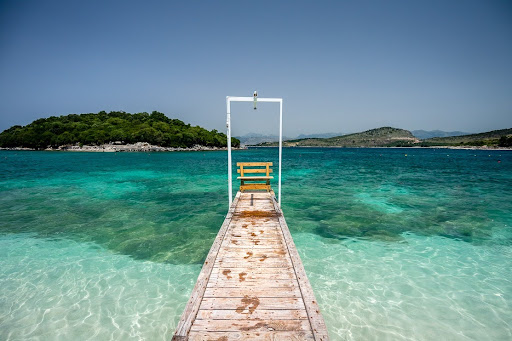
A few kilometres north of Butrint, the village of Ksamil has four small islands floating just offshore in water so clear and pale it borders on absurd. This is the postcard corner of the Riviera, and it has developed accordingly — beach bars, sunloungers, inflatable flamingos — but it still manages to feel human-scaled and fun rather than overwhelmed. Go early in the morning (before 9am) and you’ll have the water to yourself. The seafood here, eaten at a plastic table with your feet in the sand, is reason enough to visit Albania.
Qeparo & Borsh — The Clifftop Villages
Drive north and the coast becomes more dramatic. The villages of Qeparo and Borsh cling to limestone cliffs hundreds of metres above the sea, their Ottoman-era stone houses half-absorbed by fig trees and cacti. Borsh has one of the longest beaches on the entire Riviera (7 km of largely empty pebble and sand) while the old village above is a tangle of crumbling towers and cobblestones that feels genuinely undiscovered. This is where I’d recommend booking a stone guesthouse for a night or two — the sunset views over the Ionian are extraordinary.
Himara — The Riviera’s Heart
Himara is perhaps the best base for exploring the Riviera as a whole. It has a proper beach town energy — restaurants, nightlife, good accommodation options across all budgets — while remaining far less crowded than comparable destinations in the Mediterranean. The old castle town above the modern resort is worth the 20-minute walk up, and the nearby beaches of Livadhi and Potami are stunning. Himara also has a sizeable Greek-speaking minority, which gives the local cuisine a slightly different flavour — the olive oil here is exceptional.
Palasë & Dhermi — Where the Beautiful People Come
As you head north toward the old mountain pass, Palasë and Dhermi have become the trendier end of the Riviera — boutique guesthouses, natural wine bars, open-air clubs that go until sunrise. Dhermi beach is wide, pebbly and backed by a grove of olive trees that provide welcome shade in August. The village above has some of the most beautiful traditional architecture on the entire coast. This is also where you’ll find some of the Riviera’s first serious wellness offerings: yoga retreats, massage therapists, and small spas attached to boutique hotels.
Wellness & Spa on the Riviera
Albania isn’t yet on the luxury spa circuit, and that’s part of its appeal. What you find instead is something more authentic: traditional treatments, clean mountain air, thermal springs, and the kind of deep relaxation that comes from genuinely slowing down in a beautiful, unhurried place.
- Sea & Salt Therapy: The Ionian’s unusually high mineral content makes simply swimming in it feel restorative. Several beach operators in Ksamil and Himara now offer floating sessions and guided open-water swimming for those who want to make the most of it.
- Olive Oil Rituals: Some guesthouses in Dhermi and Palasë offer olive oil massage treatments using local cold-pressed oil — simple, deeply nourishing, and entirely Albanian.
- Mountain Hiking & Forest Bathing: The Llogara National Park, sitting at 1,000+ metres above the Riviera, offers pine forest walks and dramatic viewpoints. The air quality here alone feels therapeutic.
- Boutique Wellness Retreats: A small but growing number of properties in Dhermi and the hills above Himara now offer structured retreat programmes combining yoga, meditation, and local cuisine. Worth searching for when you book.
What to Eat (and Drink)
Albanian food on the Riviera is a revelation for anyone who assumed Balkan cuisine means only heavy stews and grilled meats. The coastal kitchen is lighter, vegetable-forward, and relies on ingredients of extraordinary quality: heirloom tomatoes, fresh-caught fish, house-made feta-style djath cheese, and that remarkable olive oil.
Order byrek (flaky pastry with spinach, cheese, or meat) for breakfast, grilled sea bream at a harbourside restaurant for lunch, and tavë kosi (baked lamb with yoghurt) if you venture inland for dinner. Wash it all down with raki (the local spirit, often homemade and surprisingly smooth) or a cold Birra Korça, the national beer. Local restaurants are exceptionally good value — you’ll eat very well for €15–20 per person including drinks.
Practical Notes
Best time to visit: May–June and September–October offer the best balance of warm weather and thinner crowds. July and August are peak season — still manageable by Mediterranean standards, but busier and pricier.
Getting around: Renting a car gives you the most freedom and the road along the Riviera (the SH8) is one of the most scenic coastal drives in Europe. Furgon (shared minibus) connections exist between major towns but run on informal schedules.
Currency: Albanian lek (ALL). Credit cards are increasingly accepted in tourist areas but always carry some cash for smaller restaurants and markets.
Safety: The Riviera is very safe for tourists, including solo female travellers. Albanians have a strong cultural tradition of hospitality — besa — and visitors are treated warmly.
Booking your trip: For travellers flying in from elsewhere in Europe, working with an established local agency takes the stress out of connecting flights, transfers, and accommodation. Bora Travel & Tours (boratravel.al) has over 15 years of experience organising travel to and around Albania, with a dedicated team that can tailor itineraries for couples, families, and solo travellers alike. They’re reachable on WhatsApp, which makes last-minute questions easy to handle.
Go Before Everyone Else Does
The Albanian Riviera is having a moment — but it’s still a quiet moment, which is exactly why you should go now. The infrastructure is good enough to be comfortable, but the beaches aren’t yet gridlocked, the prices haven’t climbed to match Santorini or Dubrovnik, and the experience of stumbling into a clifftop village where you’re genuinely the only tourist feels increasingly rare in this part of the world.
The Mediterranean has always had two faces: the one on the postcards and the one you find when you get off the main path. Albania’s Riviera is still, just about, the second kind. Don’t wait too long.